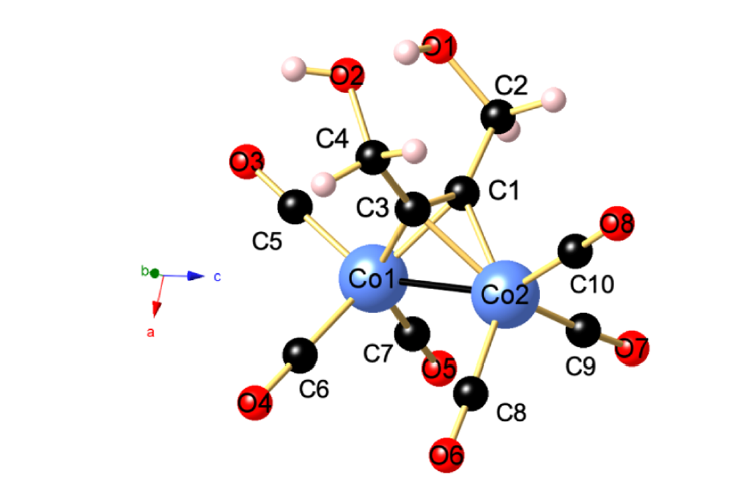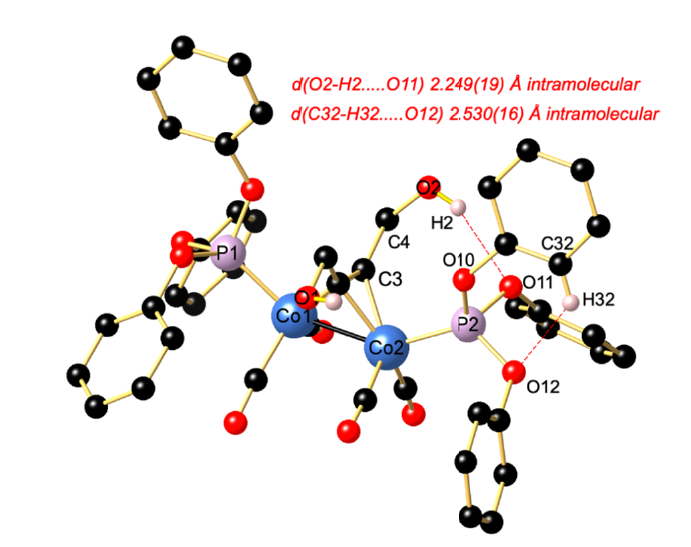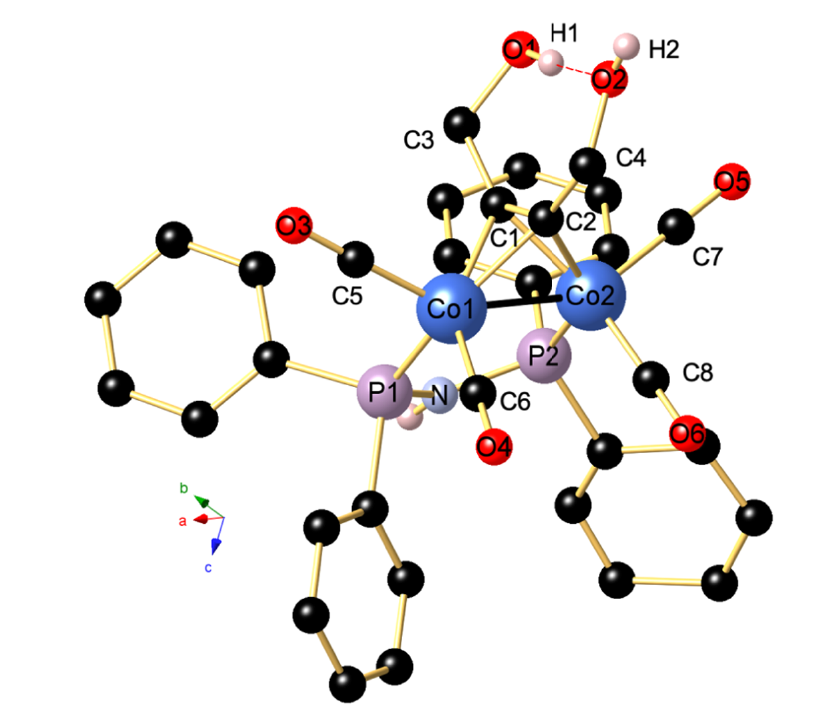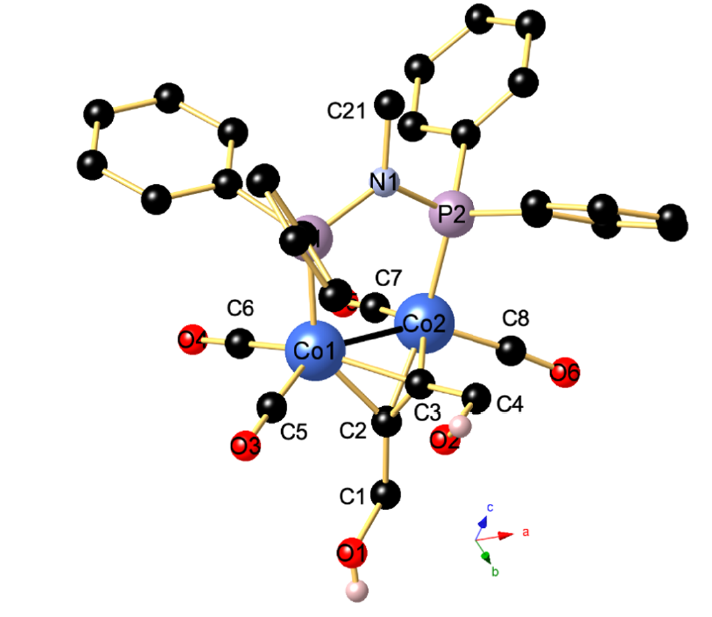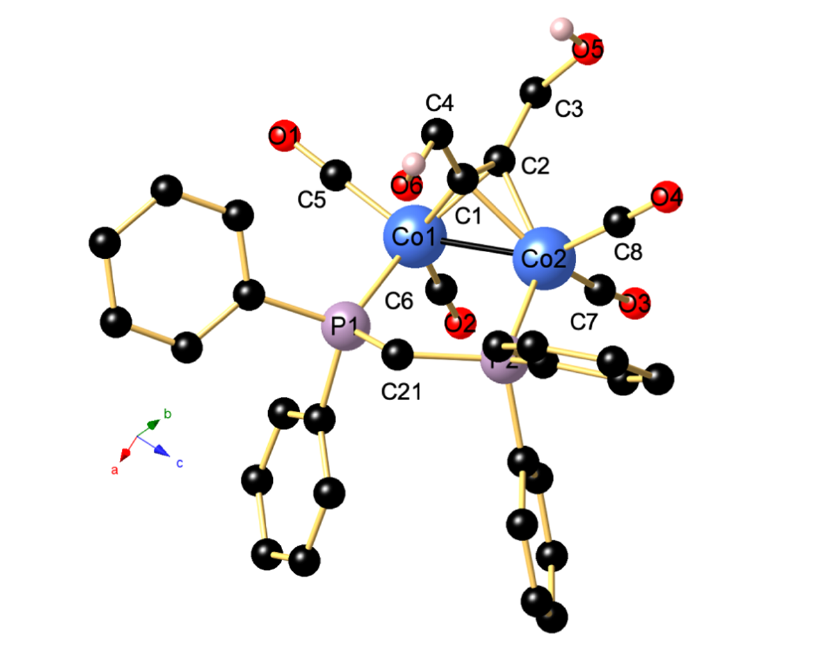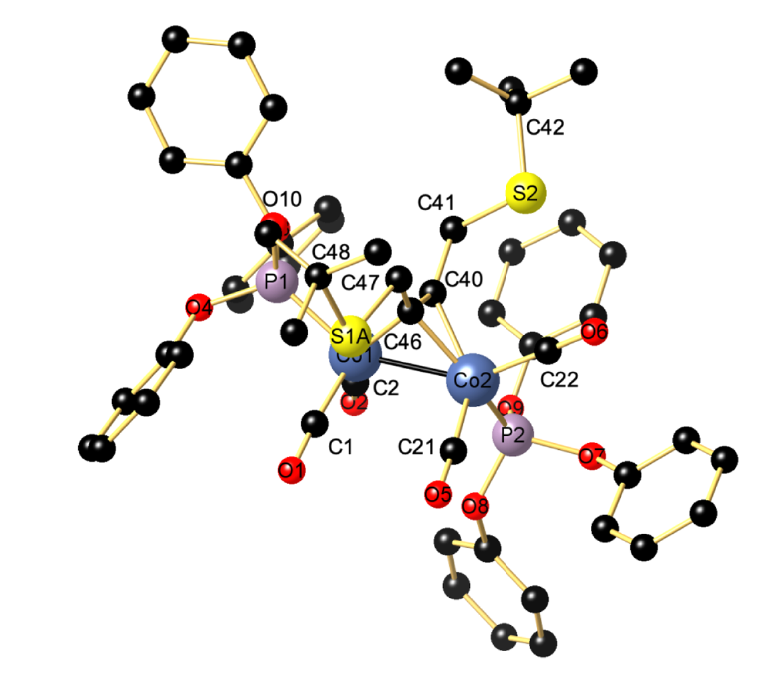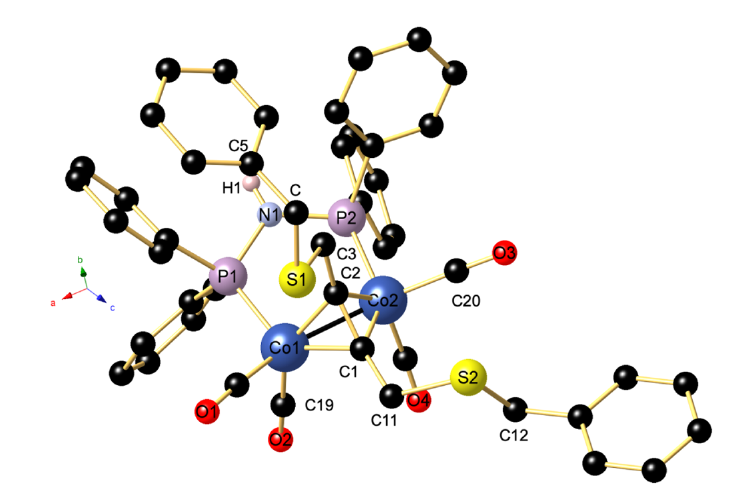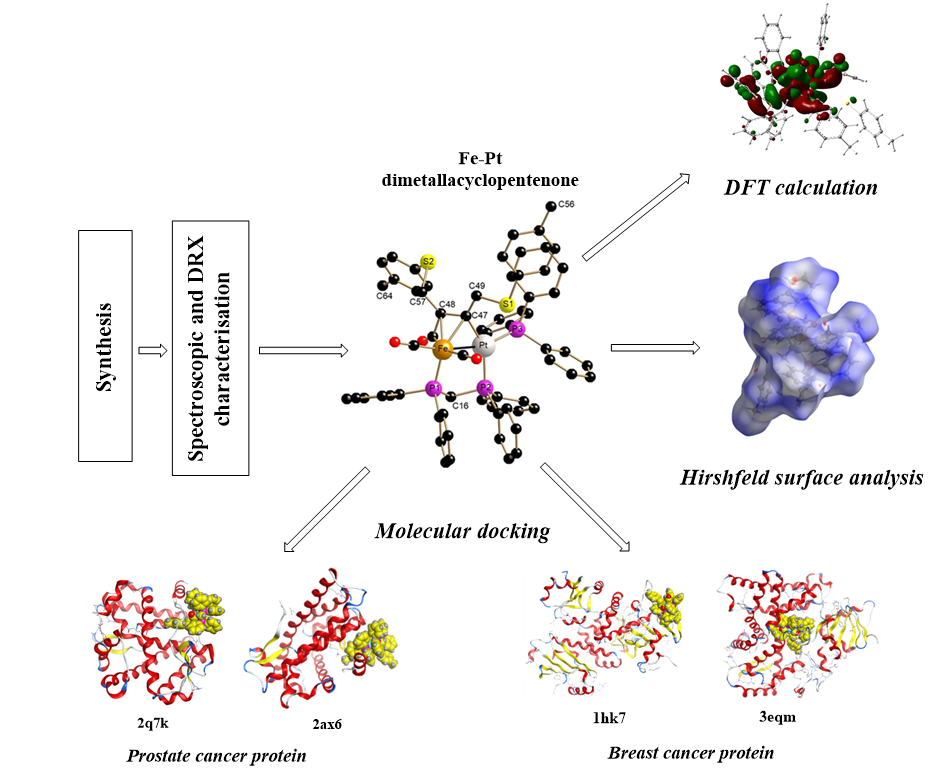
A series of dicobalt carbonyl dimetallatetrahedranes of type [Co2(CO)4L2(μ-HOCH2CCCH2OH)] (L = CO, P(OR)3; L2 = Ph2PN(H)PPh2, Ph2PN(Me)PPh2, Ph2PCH2PPh2), ligated by 1,4-butynediol (BUD) was synthesized and structurally characterized at 100 K by single-crystal X-ray diffraction to analyze in addition to the molecular architectures their propensity to generate intra- and intermolecular secondary interactions. For several selected examples, also Hirshfeld surface analyses have been performed. To evaluate the replacement of OH vs. SR, this series of BUD-based dimetallatetrahedranes (1-3) was completed by the preparation of the structurally related complexes [Co2(CO)4L2(μ-RSCH2C–CCH2SR)] (4-5). The crystallographically characterized complex[Co2(CO)4{P(OPh)3}2(μ-t-BuSCH2CCCH2SBu-t)] (4) was obtained in a Nicholas-type reaction between [Co2(CO)4{P(OPh)3}2(μ-HOCH2CCCH2OH)] (2a) and t-BuSH. Alternatatively, the latter series 4-5 was obtained in much improved yield by direct treatment of [Co2(CO)6L2] with the thioether-functionalized alkynes
RSCH2CCCH2SR (R = t-Bu, Ph, Bz). The experimental crystallographic data were compared with those obtained by DFT computing. The anticancer capacity of this series of compounds was evaluated against prostate,
breast and liver cancers through in silico docking simulations. Some compounds displayed docking scores against prostate, breast, and liver cancer proteins in the range between -4.91 – -11.01 kcal/mol, indicating a potential as
bimetallic metallodrugs in cancer therapy, deserving more detailed in vitro investigations.
Figures et illustrations