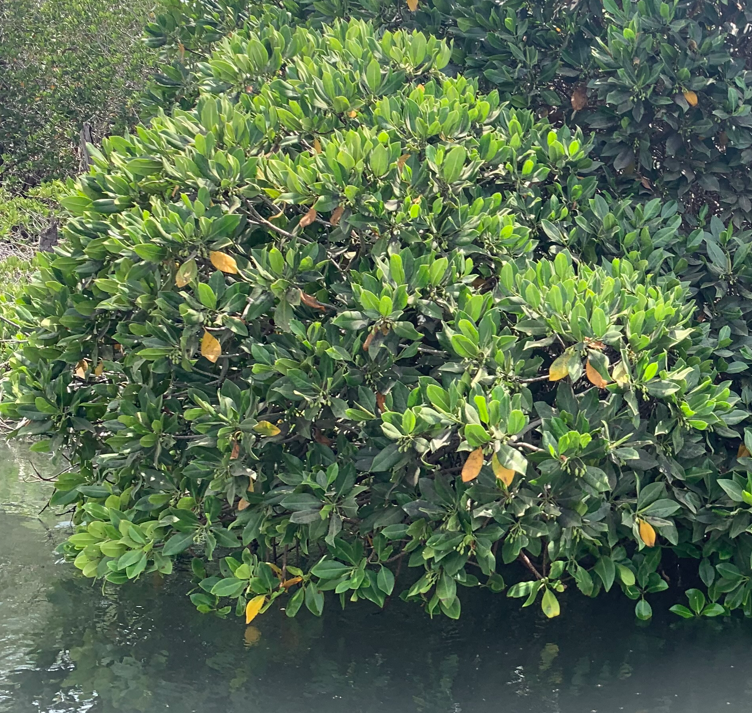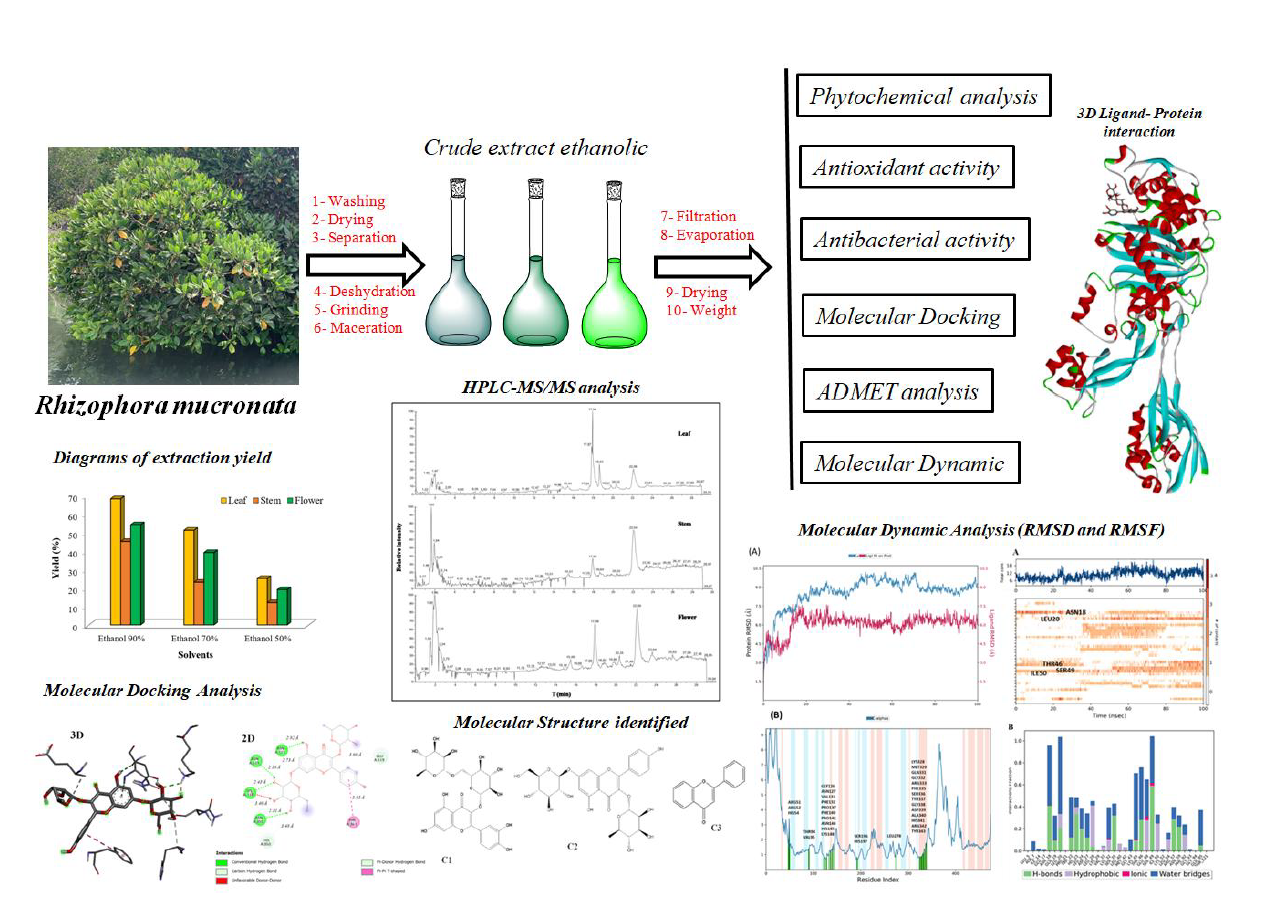
This study investigates the phytochemical composition and biological activities of crude extracts from Rhizophora mucronata Lam. collected in the Republic of Djibouti. Ethanolic extracts from leaves, stems, and flowers were analyzed, revealing high yields using 90% ethanol extraction. Flavonoid quantification showed the highest content in leaves (0.144 μg QE/mg extract), followed by flowers (0.059 μg QE/mg), and stems (0.041 μg QE/mg). HPLC-MS/MS analysis identified six major phytochemicals, including Rutin (C1), kaempferol derivatives (C2), Flavone (C3), Quinic acid (C4), 3-(Benzoyloxy)-2-hydroxypropyl alpha-D-glucopyranosiduronic acid (C5), and Naringin (C6). The flower extract exhibited the strongest effect, particularly against Staphylococcus aureus (MIC = 640 μg/mL), whereas leaf and stem extracts showed weaker activity (MIC > 2560 μg/mL for most Gram-negative bacteria). Antioxidant potential was evaluated using DPPH and ABTS assays, with flower extracts demonstrating the highest radical-scavenging activity (IC50 = 159 μg/mL for DPPH and 137.5 μg/mL for ABTS). Furthermore, Molecular docking studies revealed strong binding interactions between Naringin and key S. aureus proteins (binding energy -10.2 kcal/mol for 2W9G) and with the antioxidant enzyme catalase (2CAG, -11.1 kcal/mol), supporting its potential pharmacological relevance. ADMET analysis showed good solubility for all compounds, with C3 and C4 exhibiting the best bioavailability. Naringin displayed moderate toxicity (LD50 = 2300 mg/kg). These findings suggest that Rhizophora mucronata extracts, particularly from flowers, could serve as promising natural sources of antibacterial and antioxidant agents.
Key words: Rhizophora mucronata, antibacterial, antioxidant, Docking and dynamic molecular, and ADMET
Figures et illustrations